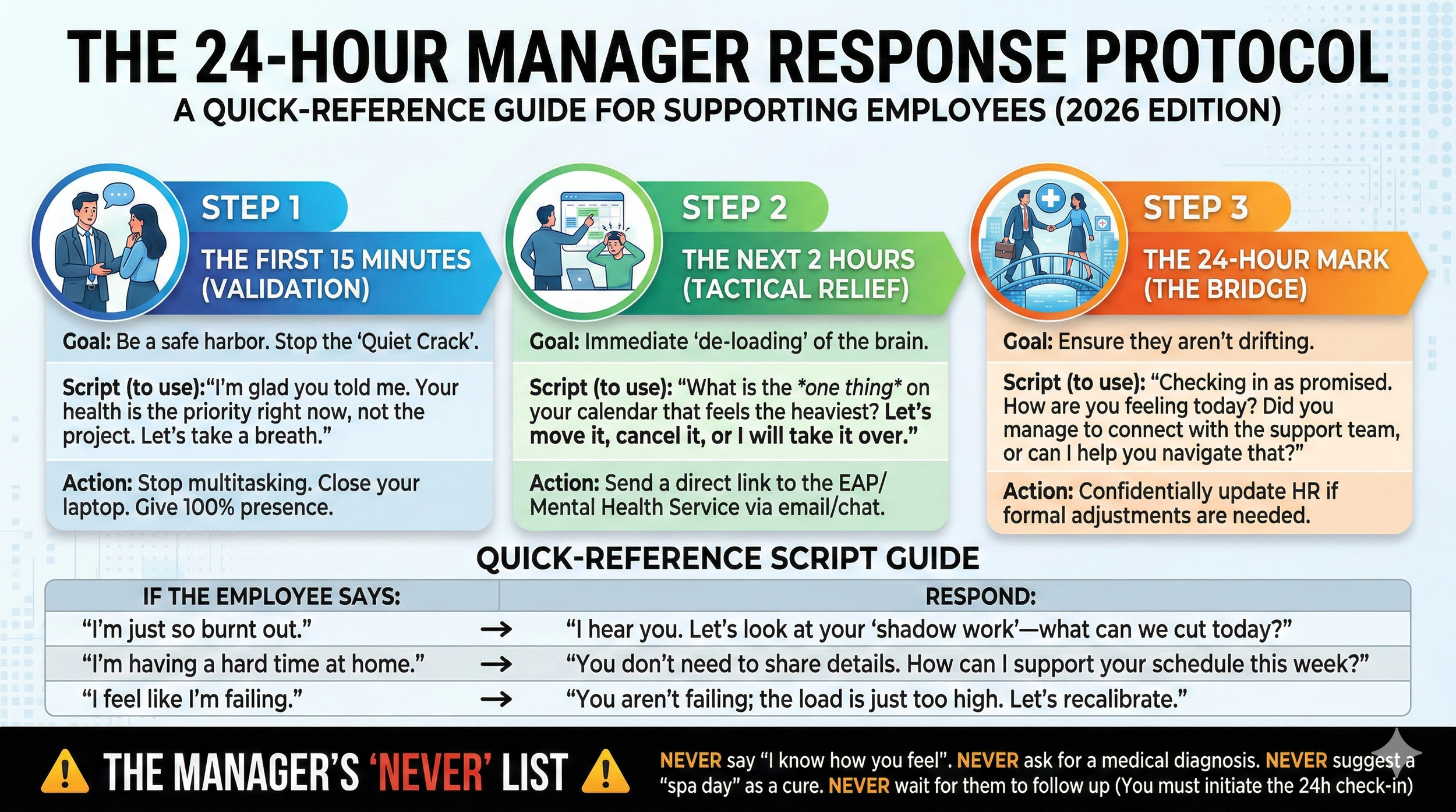
What to Say When an Employee Tells You They're Struggling

Understanding Expat Marriage Strain and How Proactive Support Saves Relationships

Beyond the Skyscrapers: Navigating Mental Health in the UAE

Forget Quiet Quitting: Why "Quiet Cracking" is the Real Risk in 2026

The Hard Truth About Mental Health ROI

Confronting AI Anxiety and Job Displacement Stress

Strategic Edge: Why Neuro-Assessment is the Next Frontier for Executive Performance

Psychiatrist, Psychologist, or Psychotherapist? Why Talking is Often the Best First Step.

Burnt Out in the Lion City? Handling Toxic Work Stress the Smart Way

🧘♀️ Ancient Wisdom, Modern Wellness: Why Seeking Mental Health Support is a Return to Your Roots

🙏 Preserving Dignity: Gently Encouraging Elderly Parents Towards a Cognitive Assessment

🔒 Your Secrets Are Safe: Why Therapy is Always Private and Confidential

🌸 The Quiet Weight: Addressing Childhood Trauma in the Asian Context

Feeling the Heat? How Counselling Can Help You Beat Office Stress in Singapore

Prepare for Service: NS and Neurodiversity

Beyond Borders, Beyond Doubt: Why Online Psychotherapy Works

School Counsellors - an indispensable pillar

Parenting an autistic child
What are some of the signs that parents can use to figure out if their child is somewhere on the autism spectrum? Read on…

What happens in an ADHD assessment?
An ADHD assessment is a comprehensive process that evaluates whether an individual meets the criteria for Attention-Deficit/Hyperactivity Disorder (ADHD). This assessment involves multiple steps, including clinical interviews, standardized questionnaires, cognitive testing, behavioral observations, and sometimes collateral information from family, teachers, or colleagues. The goal is to determine whether ADHD symptoms are present, how they impact daily life, and whether other conditions may be contributing to the difficulties.
